
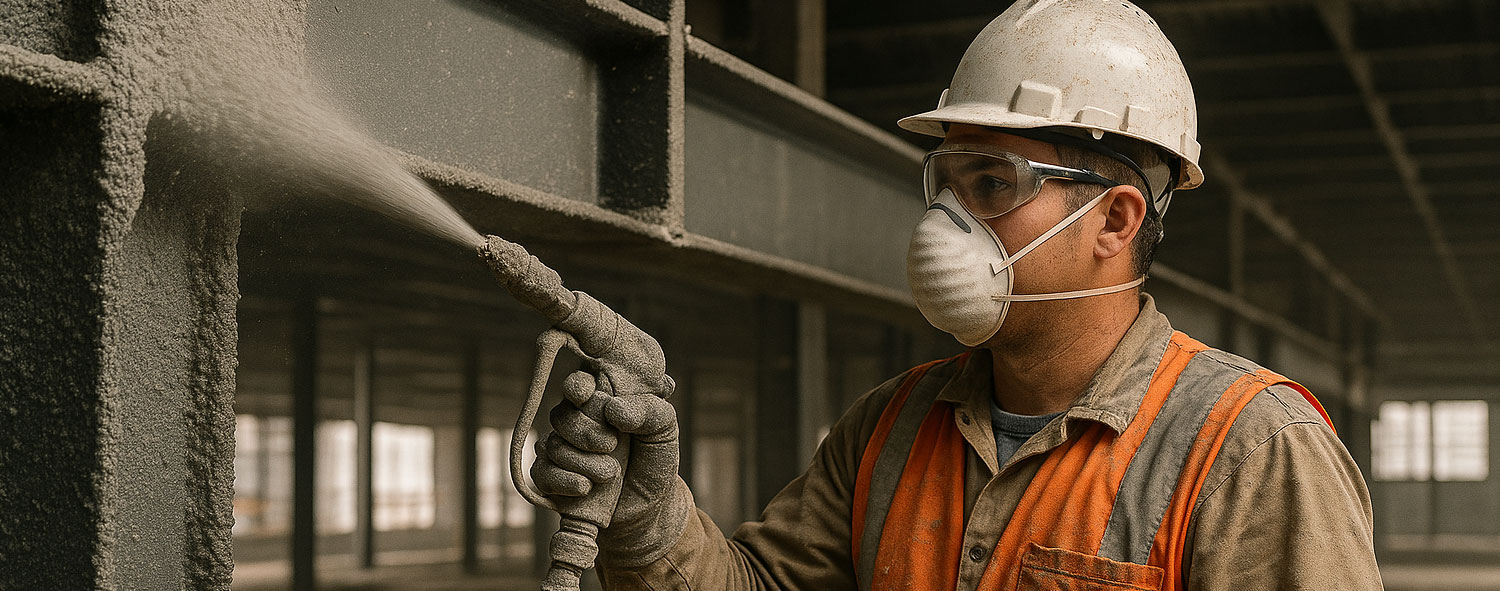
Cementitious Fireproofing Services in Alberta
Northern Spray Solutions provides spray-applied cementitious fireproofing for structural steel and other specified building assemblies across Alberta. Based in Spruce Grove, we work on commercial, industrial and institutional construction projects throughout the province.
Also known as spray-applied fire-resistive material, or SFRM, cementitious fireproofing forms an insulating layer around structural components. During a fire, this layer helps slow the rate at which the protected steel heats up, supporting the fire-resistance rating established for the assembly.
Cementitious fireproofing does not make structural steel completely fireproof. It is one part of a tested or listed assembly designed to maintain structural performance for a specified period.
Where Cementitious Fireproofing Is Used
Spray-applied cementitious fireproofing is commonly specified for concealed or utility-focused areas where structural fire protection is required and a decorative finish is not the main consideration.
Applications may include:
-
Structural steel columns
-
Beams and girders
-
Open-web steel joists
-
Steel floor and roof decks
-
Concrete assemblies where specified
-
Mechanical and service areas
-
Warehouses and distribution facilities
-
Manufacturing and industrial buildings
-
Commercial buildings
-
Parkades
-
Institutional facilities
The material, thickness and application requirements must come from the project specification and applicable fire-resistance design.
Fire-Resistance Ratings Are Assembly-Specific
Fire-resistance ratings apply to the complete tested assembly—not simply to a brand or general type of fireproofing.
The required system can depend on:
-
The specified fire-resistance rating
-
The tested or listed design
-
The type and size of the structural member
-
The shape and orientation of the steel
-
The mass and surface area of the member
-
Whether the assembly is restrained or unrestrained
-
The fireproofing product being specified
-
Required material thickness and density
-
Primer compatibility
-
Attachment, lath or reinforcement requirements
-
Interior or environmental exposure
This is why the required thickness cannot be estimated from the desired hourly rating alone. Two steel members in the same building may require different fireproofing thicknesses even when they are part of assemblies with the same rating.
Northern Spray Solutions applies the specified system according to the project documents and product requirements. The building’s design professional and authority having jurisdiction determine which fire-resistance design is acceptable for the project.
Planning the Application
Cementitious fireproofing should be coordinated with other construction work before spraying begins. Access, substrate condition and the sequence of other trades can all affect the installation.
Before application, relevant project information may include:
-
Architectural and structural drawings
-
Fireproofing specifications
-
Required fire-resistance ratings
-
Listed design numbers
-
Structural member schedules
-
Steel sizes and orientations
-
Primer or existing coating information
-
Areas that must remain uncoated
-
Access and scaffolding requirements
-
Inspection and testing requirements
-
Construction schedule and enclosure conditions
Providing this information early helps identify the correct scope and reduces avoidable delays once the applicator arrives on site.
Structural Steel and Substrate Preparation
The surface beneath the fireproofing must be suitable for the specified material. Dirt, oil, moisture, loose rust, overspray and incompatible coatings can interfere with adhesion.
Before spraying, the project team should confirm that:
-
Structural steel installation is sufficiently complete
-
Required welding and connection work has been completed
-
The substrate is clean and ready for application
-
Primers and existing coatings are compatible with the fireproofing system
-
Clips, hangers and attachments have been coordinated
-
Areas not receiving fireproofing are identified
-
Active water entry has been corrected
-
Environmental conditions fall within the product requirements
Some primers or painted steel surfaces may require additional testing, bonding agents, lath or other preparation. Compatibility should be established from the specified fire-resistance design and the fireproofing manufacturer’s requirements.
Our Cementitious Fireproofing Process
Project Review
We review the project scope, specified material, design requirements, member schedule, access and construction sequence.
Work-Area Protection
Floors, walls, windows, equipment and other surfaces outside the application area are protected as required. The work zone is coordinated to limit interference from other trades during spraying.
Material Mixing and Application
The cementitious material is mixed with water and spray-applied to the structural members. Application continues until the required coverage and build have been achieved.
Complex connections, corners, undersides and areas around attachments require careful application to avoid thin or missed sections.
Drying and Curing
Adequate temperature, ventilation and air movement may be required so the applied material can dry properly. The applicable conditions depend on the selected product and job site.
Newly applied material also needs to be protected from water, freezing conditions, impact and disturbance by other trades.
Inspection and Corrections
The completed work may be inspected for thickness, density, adhesion or cohesion according to the project specification. Areas damaged during subsequent construction must be identified and repaired with a compatible material and approved method.
Thickness and Coverage Requirements
Applying more material does not automatically provide a better installation. The goal is to achieve the thickness specified for each member while maintaining proper adhesion, density and continuity.
Important application details include:
-
Coverage around the complete required surface
-
Consistent thickness
-
Proper treatment at connections and transitions
-
No exposed areas where protection is required
-
Sufficient build on edges and corners
-
Repair of damaged or displaced material
Thickness testing and inspection requirements should be established in the project documents. Where independent inspection is required, it should be coordinated with the application schedule.
Protecting Completed Fireproofing
Cementitious fireproofinging can be damaged by water leaks, impact, vibration or work performed by other trades. Once applied, the protected areas should be monitored throughout the remainder of construction.
Common causes of damage include:
-
Installation of ducts, piping or cable trays
-
New clips or attachments added after application
-
Materials striking protected structural members
-
Roof or plumbing leaks
-
Workers removing material to reach connections
-
Equipment being placed against protected steel
Damaged areas should not be concealed or left for the fireproofing inspector to discover at the end of the project. Early identification allows repairs to be completed while the area remains accessible.
Cementitious Fireproofing Versus DC315
Northern Spray Solutions offers both cementitious fireproofing and DC315 application, but the two services address different materials and fire-protection requirements.
Cementitious fireproofing is generally applied to structural steel, steel deck and other specified building assemblies to help achieve a required fire-resistance rating.
DC315 is an intumescent coating used in specified assemblies over spray polyurethane foam insulation.
One should not be substituted for the other without an accepted design or approval. For fire protection over spray foam, visit our DC315 fire-barrier coating page.
New Construction and Fireproofing Repairs
Cementitious fireproofing may be required during new construction or as part of work on an existing building.
Existing fireproofing may need attention when it has been:
-
Damaged by construction or maintenance work
-
Removed to access structural connections
-
Affected by water entry
-
Dislodged by impact
-
Disturbed during mechanical or electrical upgrades
-
Found to have incomplete coverage
Repair suitability depends on the existing material, extent of damage, specified assembly and condition of the substrate. These details should be reviewed before a repair scope is established.
Cementitious Fireproofing Across Alberta
Northern Spray Solutions is based in Spruce Grove and serves construction projects throughout Alberta, including Edmonton, St. Albert, Stony Plain, Calgary, Grande Prairie, Fort McMurray and surrounding communities.
Mobilization and scheduling depend on the project location, access, application area, construction stage and specified fireproofing system.
Request a Cementitious Fireproofing Quote
For the most accurate project review, provide the available drawings, specifications, required ratings, listed designs, structural member schedule and anticipated construction timeline.
Call 1-780-963-4493 to get in touch with us.