
How We Protect Concrete Tanks for Long-Term Safety
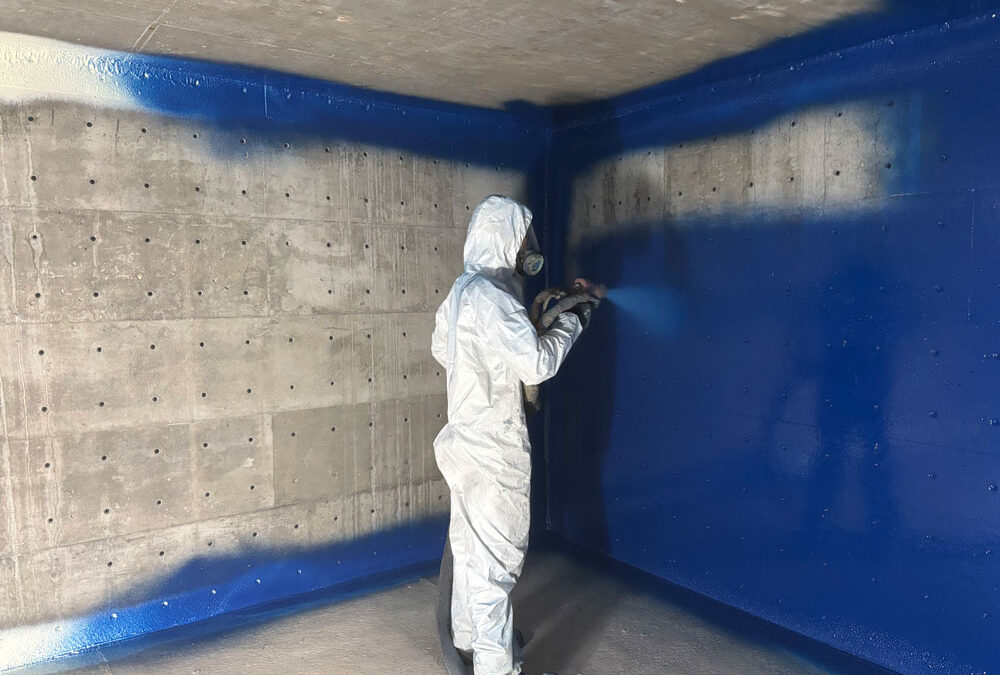
Coating a potable water tank is one of those jobs where there’s no room for shortcuts. Everything, from surface prep to material selection, needs to meet strict health and safety standards. We recently completed a full coating inside a concrete potable water tank, and this project shows what goes into doing it properly.
Why Potable Water Tanks Need Protective Coatings
Concrete is strong, but it’s porous. Over time, untreated concrete tanks can experience:
-
Water absorption
-
Mineral buildup
-
Micro-cracking
-
Bacterial growth in pores
-
Chemical leaching
A certified potable water coating creates a non-toxic, sealed surface that protects both the tank and the drinking water inside it.
The coating helps with:
-
Preventing contamination: Stops concrete particles or minerals from entering the water supply.
-
Reducing long-term maintenance: Sealed walls require fewer cleanings and resist wear.
-
Extending tank lifespan: Moisture can’t penetrate or erode the concrete.
-
Improving water quality stability: A smooth interior reduces places for bacteria to anchor.
For municipalities, industrial clients, and rural water systems, this isn’t just an upgrade—it’s essential.
Our Process for Potable Water Tank Coating
Every tank is different, but the steps remain largely the same. Here’s how we approached this project:
1. Inspection & Surface Prep
Before any coating is applied, we inspect the condition of the concrete to look for:
-
Cracks
-
Honeycombing
-
Surface defects
-
Moisture levels
-
Old coatings or contaminants
Surface prep is one of the most important parts of the job. For this tank, we cleaned the interior, addressed minor imperfections, and ensured the concrete profile was ready for proper adhesion.
2. Masking & Containment
Potable coatings must be applied cleanly. All edges, corners, and joints were masked to produce a sharp finish. Containment helps control overspray and ensures the coating only goes where it should.
3. Applying the Certified Potable Coating
With prep complete, we began applying the certified blue potable-water coating. This product meets the required standards for direct contact with drinking water.
During application, we focus on:
-
Uniform film thickness
-
Complete coverage in corners
-
Smooth transitions at joints
-
Building up protection in high-wear zones
The coating is sprayed in controlled passes, allowing us to build a seamless interior barrier.
4. Cure Time & Final Quality Check
Once applied, the coating must cure to proper hardness before the tank goes back into service. During this stage, we check:
-
Evenness of the coating
-
Adhesion to the substrate
-
Coverage consistency
-
Thickness measurements
Only after the coating passes all quality checks is the tank ready for inspection or reactivation.
Why This Work Matters
A properly coated tank helps ensure:
-
Safe drinking water
-
Longer concrete lifespan
-
Reduced maintenance costs
-
Better resistance to chemicals and bacteria
For clients, it means peace of mind knowing the tank interior is protected and compliant with industry standards.
Who We Do This Work For
Northern Spray Solutions provides potable coatings for:
-
Municipal water tanks
-
Rural water systems
-
Fire suppression tanks
-
Industrial facilities requiring clean-water storage
-
Farms and agricultural sites
Our team is trained to apply coatings safely and accurately, following all guidelines for drinking water protection.
Looking for Potable Water Tank Coating Services?
If your concrete water tank needs a new coating or an inspection, we can help. Whether it’s maintenance, rehabilitation, or a fresh install, our team ensures the coating is done right from the start.
Northern Spray Solutions
Spruce Grove, Alberta
📞 780-963-4493