
Improving Comfort, Strength, and Moisture Control with Spray Foam
Sea cans are useful for storage, workshops, job-site units, farm use, hobby spaces, and full conversions. The problem is that bare steel does not handle Alberta weather very well.
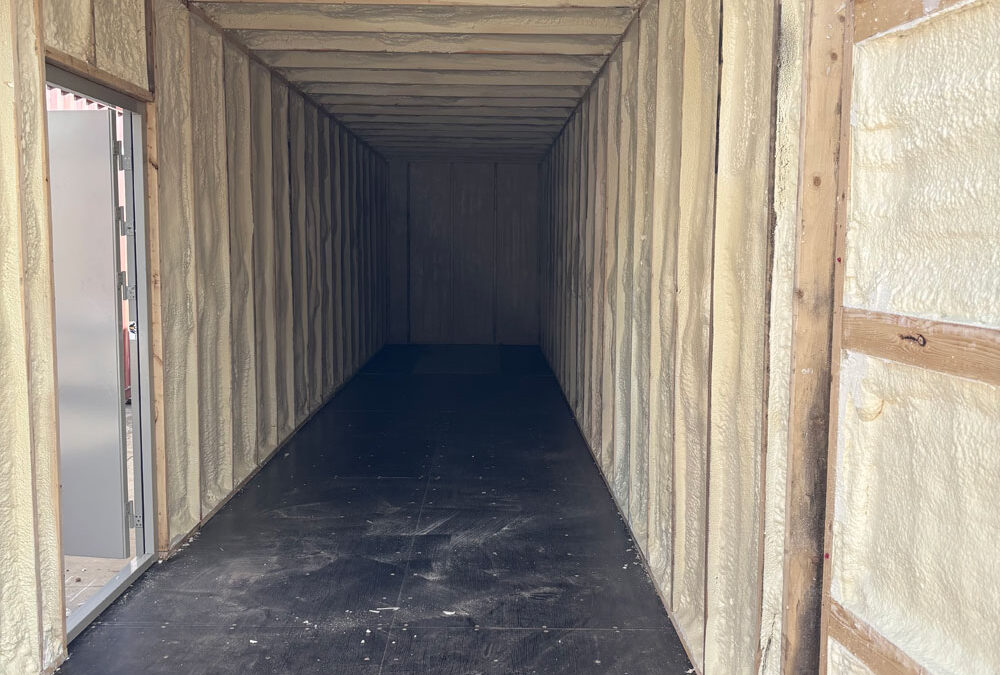
Northern Spray Solutions recently completed a sea can spray foam insulation project in Leduc, AB using closed-cell spray foam. The goal was to help improve temperature control, reduce moisture problems, and make the container more usable through different seasons.
When steel heats up, cools down, and meets changing indoor air conditions, condensation can become a real issue. Spray foam helps deal with that problem at the surface.
Why Sea Cans Need Spray Foam
A sea can is not built like a house, shop, or framed building. It is a steel box, which means it reacts quickly to outdoor temperature changes.
In summer, the steel can heat up fast. In winter, it can lose heat quickly. When warm air hits cold metal, moisture can collect on the walls and ceiling. That moisture can lead to rust, damp storage conditions, and damage to tools, equipment, or materials inside.
Closed-cell spray foam helps create a thermal layer directly against the steel. That makes the interior more stable and less exposed to quick temperature swings.
Why Closed-Cell Foam Works Well on Steel
Closed-cell spray foam is a strong fit for sea cans because it can be applied directly to the inside walls and ceiling.
It follows the ribs, seams, corners, and uneven areas of the container. That matters because sea cans are not flat, simple spaces. They have corrugated walls, tight edges, door frames, hardware, and areas that standard insulation can be hard to fit around.
Spray foam fills those spaces more cleanly and helps create a more consistent insulated layer. It also helps reduce air movement against the steel surface, which is one of the main causes of condensation problems.
A Recent Sea Can Project in Leduc
This Leduc, AB project involved insulating the inside of a sea can so it could be used more reliably through changing Alberta conditions.
The client needed better control inside the container, especially for tools, equipment, and stored materials. Bare steel would have made the space more vulnerable to cold, heat, and moisture buildup.
By applying closed-cell spray foam to the interior walls and ceiling, the container gained a more useful insulated layer. It is now better suited for storage, work use, or future finishing, depending on how the client plans to use the space.
How the Sea Can Was Prepared
Good spray foam work starts before the spraying begins.
For a sea can, the surface needs to be clean, dry, and ready for proper foam adhesion. Any dust, loose material, surface rust, or moisture can affect the job. The crew also needs to protect areas that should not be sprayed, including door tracks, hinges, locking hardware, vents, electrical areas, and access points.
This prep work matters because the container still needs to function properly after insulation. Doors need to close. Hardware needs to move. Access points need to stay clear.
Creating a Better Interior Surface
Once the prep work is done, the closed-cell foam is applied to the walls and ceiling in controlled passes.
The goal is to create a consistent insulated layer across the inside of the container. The foam needs to cover the ribs, seams, corners, and wall sections without blocking parts of the sea can that still need to be used.
This helps turn the container from a bare steel storage box into a more practical space. It can support many uses, including equipment storage, farm storage, job-site use, workshop setups, hobby space, or future interior finishing.
Better Control Through Alberta Weather
Alberta weather is hard on steel containers.
Cold snaps, hot summer days, freeze-thaw cycles, and shoulder-season temperature swings can all affect the inside of a sea can. Without insulation, the interior can become cold, damp, hot, or unpredictable.
Closed-cell spray foam can help reduce those swings. It helps the container hold more stable conditions and gives stored items better protection than bare steel alone.
That does not make every sea can perfect for every use, but it does make the space more practical.
Common Uses for Insulated Sea Cans
Clients insulate sea cans for many reasons.
Some use them for construction site storage. Others use them for farm equipment, mobile work units, hobby spaces, small workshops, job-site offices, or storage for tools and materials.
The right insulation approach depends on how the sea can will be used. A container used for basic storage may need a different setup than one being prepared for daily work, heating, cooling, or interior finishing.
That is why the project should be reviewed before the insulation work begins.
Ask About Sea Can Spray Foam Insulation
If you have a sea can, storage container, mobile unit, or job-site container that needs better temperature and moisture control, Northern Spray Solutions can help.
This recent Leduc, AB project is a good example of how closed-cell spray foam can make a steel container more usable in Alberta conditions.
Northern Spray Solutions can review the container, explain what needs to be protected, and recommend the right next step.