
Joist ends are one of those areas most people never think about until comfort problems show up.
We recently completed joist end spray foam insulation in Peace River, AB. It is not the most dramatic part of a building, but it is one of those small details that can help the whole space perform more consistently.
When joist ends are not sealed properly, air can move through gaps around the framing. That can lead to drafts, cold spots, and uneven comfort, especially in Alberta homes and buildings that deal with long winters and sharp temperature swings.
What Are Joist Ends?
Joist ends are the ends of the floor joists where they meet the outside wall or rim area of the building.
This area often has framing, sheathing, wiring, small gaps, and hard-to-reach corners. Because it is not always easy to see, it can get overlooked during insulation work.
The problem is that small gaps in this area can still affect the building. Air does not need a large opening to move through. If the joist end area is poorly sealed, the space can feel colder, draftier, or less consistent than it should.
Why This Area Matters
A building does not only lose comfort through big obvious openings.
It can also lose performance through small weak points repeated across the structure. Joist ends are a good example. Each individual gap may not look like much, but together they can allow air movement through an important part of the building envelope.
Spray foam works well here because it expands into the space and helps seal around the framing. That gives the area a more complete insulated layer than loose or cut materials can provide in tight spaces.
A Recent Project in Peace River
This Peace River, AB project focused on sealing joist end areas that are easy to miss but important to get right.
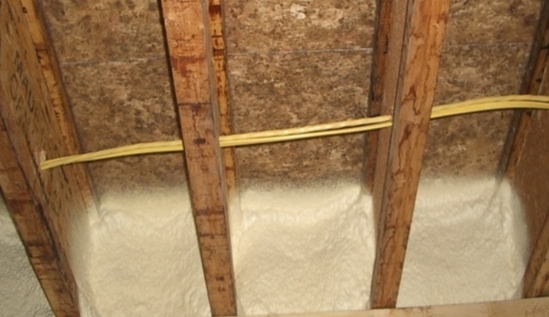
The photo shows spray foam applied between the framing members along the lower wall area. The goal was to reduce air movement and help the building hold a more stable indoor environment.
This is the kind of work that may not stand out once the project is finished. But behind the walls, these details matter. Good insulation work often comes down to handling the hidden areas properly.
Better Air Sealing Starts in the Details
Spray foam is often chosen for joist ends because it can seal and insulate at the same time.
In this type of application, the foam can fill uneven spaces, wrap around framing, and close off small gaps that would otherwise be difficult to address. That helps reduce unwanted air movement through the joist end area.
For homeowners, builders, and property owners, this can help improve comfort from room to room. It can also support better overall performance when the rest of the building envelope is insulated properly.
Useful in Alberta Homes and Buildings
Alberta weather puts pressure on insulation work.
Cold winters, wind, freeze-thaw cycles, and wide temperature changes can expose weak areas in a building. If joist ends are not sealed well, those weak points can become more noticeable during the colder months.
Spray foam does not replace good building design, ventilation, or proper heating. But it can help strengthen one of the areas where air leakage often starts.
That is why joist end insulation is worth looking at during new builds, renovations, basement work, and retrofit projects.
Ask About Joist End Spray Foam
If your home, shop, garage, or building has drafty areas, cold spots, or unfinished framing, the joist ends may be worth checking.
We are based in Spruce Grove, Alberta, and work on spray foam insulation projects across Edmonton and surrounding Alberta communities, including larger projects in areas such as Peace River.
This recent Peace River, AB project shows how a small insulation detail can help a building perform more consistently.