
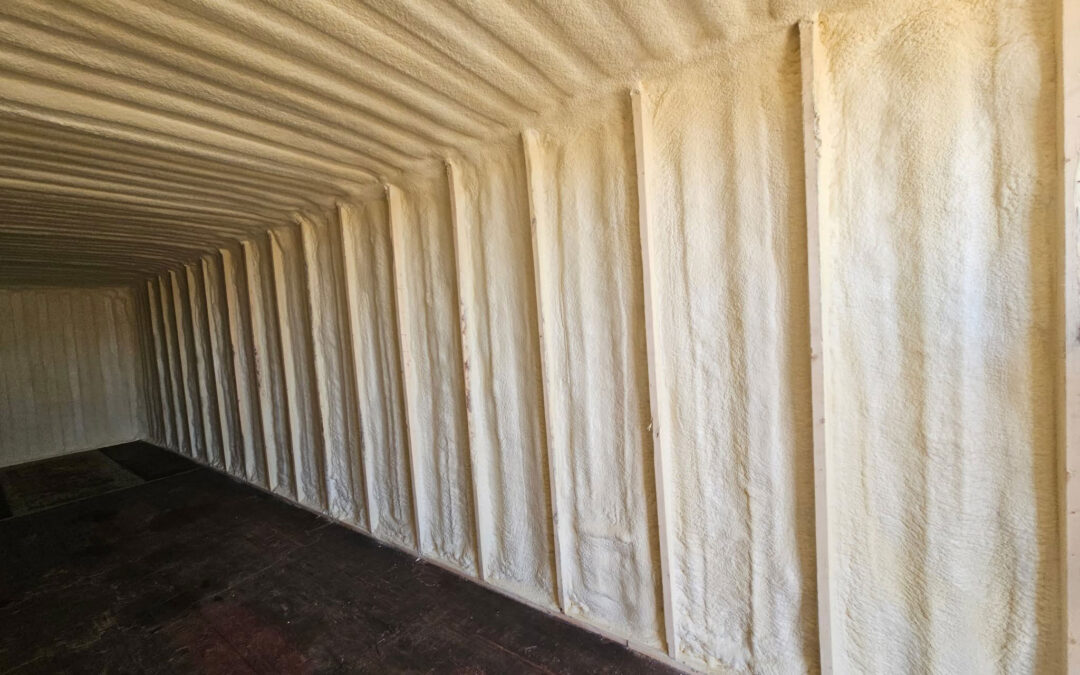
We recently completed a spray foam project inside a shipping container in Fort Saskatchewan, Alberta. The foam was applied across the corrugated steel walls and ceiling, following the shape of the panels to create a continuous insulated layer.
This type of application requires attention to the ribs, corners and transitions throughout the container. Unlike a flat framed wall, corrugated steel has repeated high and low sections that need consistent coverage.
For more information about how the material is created and applied, visit our page about spray polyurethane foam.
Why Corrugated Steel Requires a Different Approach
Shipping-container walls are made from profiled steel rather than flat panels. The ribs give the container strength, but they also create numerous angles and narrow sections that can be awkward to insulate with rigid boards or batt insulation.
Every cut piece of conventional insulation can introduce another joint. If the material does not fit tightly against the steel, air can move behind it and come into contact with the colder metal surface.
Spray foam is applied directly to the corrugated panels. It follows the shape of the walls and ceiling without requiring individual pieces to be measured and cut around every rib.
For broader information about temperature control, condensation and potential container uses, see our guide to sea-can spray foam insulation.
Creating Consistent Coverage
The finished surface in this Fort Saskatchewan project shows how the foam follows the profile of the container rather than filling the entire interior until the walls appear flat.
The goal is to create the required insulation layer across the specified surfaces. During application, attention must be given to:
-
The sides and faces of each corrugated rib
-
Corners where the walls meet the ceiling
-
Seams and changes in the steel panels
-
Framing around the container opening
-
Areas near fixtures or installed equipment
-
Sections that are difficult to reach with the spray gun
Corners and deeper grooves can be easy to miss if the application is viewed from only one direction. The installer needs to adjust position and spray angle as work progresses.
Preparing the Steel Before Spraying
Spray foam needs a suitable surface beneath it. The interior steel should be clean, dry and free from loose material that could interfere with adhesion.
Preparation can include checking for:
-
Moisture or condensation on the steel
-
Dirt, dust or oily residue
-
Loose rust or deteriorated coatings
-
Existing leaks
-
Damaged steel panels
-
Fixtures and hardware requiring protection
-
Openings that must remain accessible
Problems with water entry or damaged metal should be addressed before the foam is applied. Spray foam should not be used simply to cover an unresolved leak or deteriorated surface.
The container’s intended use also affects the project plan. A unit used for basic storage may have different insulation and finishing requirements than one being converted into a heated workshop, equipment room or occupied space.
Why the Ceiling Is Important
The roof of a shipping container is exposed directly to sun, rain, snow and changing outdoor temperatures. Leaving the ceiling uninsulated can allow a large amount of heat transfer even when the walls have been sprayed.
Warm interior air can also reach a cold steel ceiling and create conditions where condensation is more likely to develop.
Applying foam across both the walls and ceiling provides more complete coverage than insulating the walls alone. It also closes the transition where the vertical panels meet the roof structure.
Northern Spray Solutions provides commercial spray foam and insulation services for shipping containers, storage buildings, shops and other structures across Alberta.
Checking the Finished Application
Once spraying is complete, the interior should be reviewed before other finishes or equipment block access to the foam.
The review may include checking for:
-
Missed areas between corrugations
-
Thin sections
-
Gaps around corners and transitions
-
Foam separating from the steel
-
Areas damaged during later work
-
Overspray on protected fixtures or hardware
The photo from this Fort Saskatchewan project shows the spray foam stage of the work. Any additional covering or fire-protection requirement depends on how the container will be used and the requirements applying to that particular project.
Where an approved thermal-barrier coating over qualifying spray foam is part of the design, learn more about our DC315 fire-barrier coating service.
Shipping Containers Can Serve Different Purposes
Shipping containers are used across Alberta for equipment storage, job-site materials, workshops, farm supplies and other practical purposes.
How the container will be used determines more than the amount of insulation. The project may also need to account for:
-
Heating or cooling equipment
-
Electrical panels and wiring
-
Interior wall finishes
-
Ventilation
-
Doors and access points
-
Floor insulation
-
Moisture produced inside the space
-
Fire-protection requirements
These details should be considered before the spray foam is installed. Planning ahead helps keep important fixtures accessible and avoids unnecessary cutting or removal of completed foam later.
Spray Foam Services in Fort Saskatchewan and Across Alberta
Northern Spray Solutions is based in Spruce Grove and completes spray foam projects in Fort Saskatchewan, Edmonton and communities across Alberta.
Our work includes shipping containers, shops, garages, commercial buildings and other structures with surfaces that can be difficult to insulate using conventional materials.
If you are planning to insulate a shipping container or another corrugated metal structure, contact Northern Spray Solutions to discuss its intended use, current condition and the areas that need to be sprayed.
Call 1-780-963-4493 to discuss your project.