
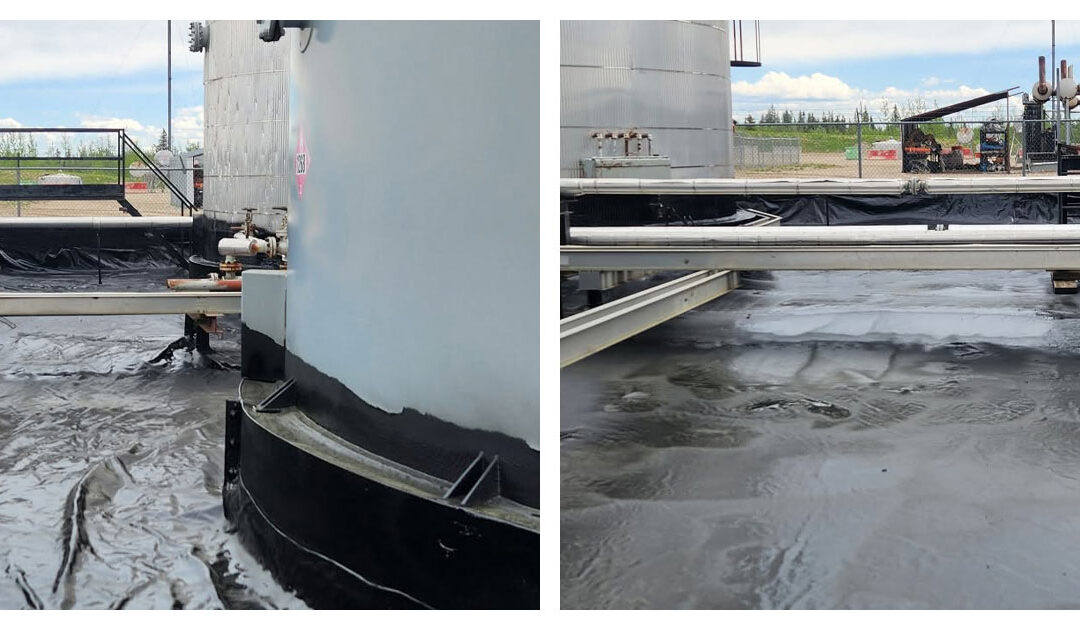
We completed this containment coating at an Alberta oilfield site some time ago. A recent look at the installation showed the coated surface continuing to provide a protected base around the storage tanks, piping and equipment supports.
Seeing how an installation performs after it has been exposed to operating conditions and Alberta weather provides useful information. It also gives the site operator an opportunity to find damage before a small opening develops into a larger repair.
Why Revisit a Completed Containment Project?
A newly installed containment system should be checked before the area returns to service, but inspections should not stop there.
Oilfield containment areas can be exposed to:
-
Equipment and vehicle activity
-
Hoses and tools moving across the surface
-
Alberta temperature changes
-
Snow, rain and standing moisture
-
Shifting or settling beneath the system
-
Maintenance work around tanks and piping
-
Weed growth around edges and penetrations
-
Accidental cuts, punctures and impact
The coating may continue to look good overall while still developing a small area that requires attention. Regular inspections make it easier to find these concerns while repairs remain manageable.
Learn more about our secondary containment systems for Alberta oilfield operations.
What Should Be Checked?
An oilfield containment inspection should cover the full surface as well as the detailed areas where the coating meets other materials.
The Main Containment Surface
The open surface should be checked for cuts, punctures, cracking, bubbling, separation or excessive wear. Any section that feels soft or moves underfoot may require closer examination of the base beneath it.
Debris should be removed so the complete surface remains visible. Dirt and stored materials can conceal damage and make drainage problems more difficult to identify.
Tank Bases and Supports
Transitions around tanks, legs, platforms and equipment supports need particular attention. These areas can be affected by movement, vibration and maintenance activity.
The coating should remain properly connected around the base of each tank and support. Gaps or separation can create a path beneath the protective layer.
Pipes and Penetrations
Pipes, valves, drains, conduits and other penetrations create changes in the containment surface. The coating needs to remain intact where it meets these components.
Inspection should include the complete perimeter of each penetration rather than only the easiest side to see.
Edges and Termination Points
The outer edges of the containment area should remain secure and free from lifting or separation. Damage along an edge can allow water, soil and vegetation to move beneath the system.
Terminations near berms, curbs and access points may also experience more wear than open sections.
Managing Ground Conditions Around Oilfield Equipment
The coated installation provides a defined working surface around the tanks and equipment. This helps separate the work area from the exposed ground beneath it and can make surface conditions easier to observe and maintain.
The containment system does not replace proper site grading or drainage. Water still needs an approved method of collection and removal. If the underlying ground settles or drainage changes, the containment surface may begin to sag or collect water in low areas.
Signs of possible base movement include:
-
New depressions in the surface
-
Areas that feel soft underfoot
-
Water collecting where it did not previously
-
Pulling around tank supports
-
Wrinkles or changes that continue to grow
-
Separation along perimeter edges
These conditions should be assessed before they place additional stress on the coating.
For related applications involving tanks, pipelines and industrial equipment, visit our oilfield spray and coating services page.
Controlling Vegetation Around the Site
Covering the prepared ground can reduce the opportunity for weeds and other vegetation to grow within the immediate containment area. This can help keep the surface visible and reduce ongoing vegetation removal around tanks and piping.
Growth should still be monitored around edges, seams, supports and penetrations. Roots can place pressure on weak areas or work their way beneath a loose termination.
Reducing dry vegetation around equipment may also remove some available combustible material. This should not be confused with a fire-resistance rating. The containment coating itself should not be described as fireproof unless the exact system has been tested and specified for that purpose.
When Is a Repair Needed?
Not every mark or change in appearance means that the complete system needs replacement. Localized damage can sometimes be cleaned, prepared and repaired using materials compatible with the original coating.
A repair assessment should consider:
-
The type and extent of damage
-
Whether the base has moved
-
The condition of the surrounding coating
-
Exposure to stored liquids or chemicals
-
Moisture beneath the damaged section
-
Compatibility with the original material
-
Required cure time before returning the area to service
The source of the damage should also be addressed. Repairing a puncture without changing the activity that caused it may lead to the same problem again.
Northern Spray Solutions also provides industrial protective coating services for concrete, steel and other suitable surfaces across Alberta.
Keeping Inspection Records
Site operators can make future reviews more useful by maintaining basic records for the containment system.
Documentation may include:
-
Installation and repair dates
-
Photographs of the completed surface
-
Product and application information
-
Inspection dates
-
Areas requiring monitoring
-
Locations of completed repairs
-
Changes to equipment or site drainage
-
Spills or incidents affecting the coating
Taking photographs from the same positions during each inspection can make gradual changes easier to identify.
Oilfield Containment Work Across Alberta
Northern Spray Solutions is based in Spruce Grove and works with oilfield and industrial clients across Alberta. Our containment work is planned around the tanks, piping, equipment, site conditions and materials handled at each location.
This completed project is a good example of why the condition of an existing installation matters. A containment system should continue to be inspected and maintained after the initial application is finished.
If an existing containment coating needs to be assessed, repaired or expanded, contact Northern Spray Solutions to discuss the site and current condition.
Call 1-780-963-4493 to discuss your project.