
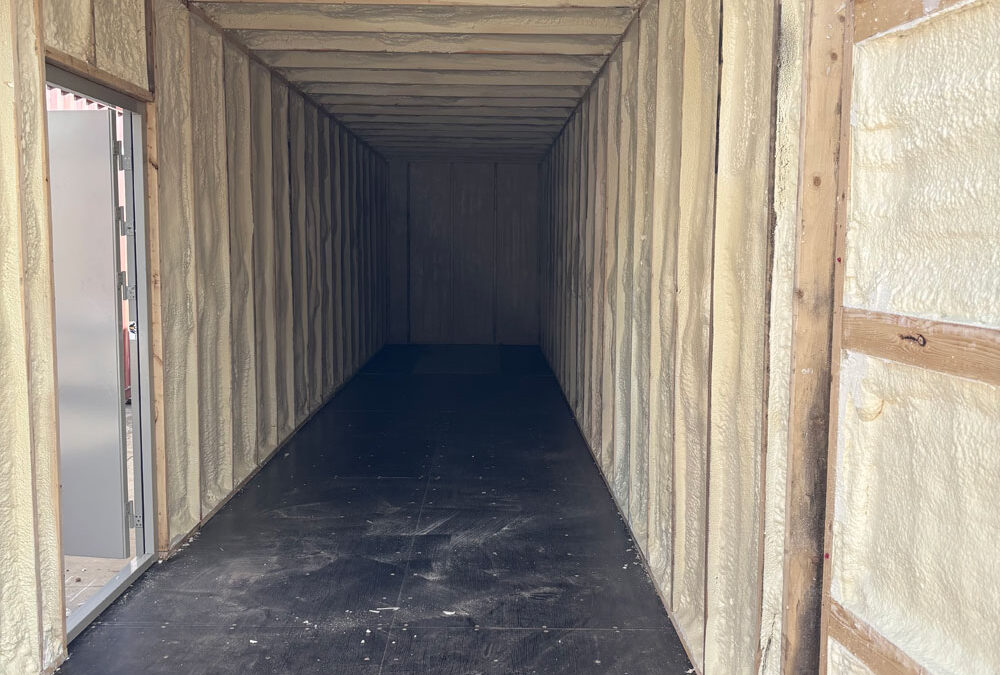
Improving Comfort, Strength, and Moisture Control with Spray Foam
Sea-cans are one of the most versatile structures out there. They’re used for storage, workshops, mobile job-site units, hobby spaces, and full conversions — but in their raw form, they’re not built for Alberta’s climate. Bare steel reacts quickly to temperature changes, creating condensation, heat loss, and fluctuating interior conditions.
We recently completed a sea-can insulation project using closed-cell spray foam. This application transformed the container into a dry, stable, and energy-efficient space ready for year-round use.
Why Sea-Cans Need Spray Foam
Steel containers behave differently from wood-frame buildings. They heat up fast in the sun and lose heat even faster in cold weather. When warm air meets cold metal, condensation forms on the walls and ceiling — and over time, that moisture causes rust, mold, and damage to whatever is stored inside.
Closed-cell spray foam solves these issues because it:
-
Bonds directly to steel
-
Creates a moisture-resistant thermal layer
-
Prevents interior sweating/condensation
-
Adds rigidity to the container frame
-
Maximizes R-value in a limited space
The end result is a controlled, insulated environment that stays comfortable and predictable.
Project Overview: How We Insulated This Sea-Can
For this job, the client needed a sea-can that would be used through multiple seasons. They wanted better temperature control, moisture prevention, and a more reliable environment for tools and equipment.
Here’s how the project unfolded:
1. Surface Preparation
Proper adhesion starts with clean steel. Before spraying, we:
-
Checked for surface rust
-
Removed dust and debris
-
Confirmed all interior surfaces were dry
-
Made sure the container was ventilated for safe application
Spray foam requires direct contact with the metal, so surface prep is a critical step
2. Masking Door Frames, Hardware & Access Points
Any area not receiving insulation was masked and protected. This includes:
-
Door tracks
-
Hinges
-
Locking hardware
-
Electrical or conduit areas (if present)
Clean lines make the final result look professional and allow all moving parts to function normally.
3. Applying Closed-Cell Spray Foam
With everything prepped, the foam was applied to the interior walls and ceiling. Closed-cell foam is perfect for sea-cans because it:
-
Has a higher R-value per inch
-
Forms a dense, hardened barrier
-
Doesn’t absorb water
-
Adds structural stability
Spraying is done in passes to control expansion and ensure even coverage across all surfaces.
4. Creating a Continuous Thermal Envelope
The goal with a sea-can is to eliminate thermal bridging — the rapid movement of heat through metal. Closed-cell foam fills every rib, seam, and cavity, creating a sealed thermal envelope.
This step transforms the space from “cold storage only” into a container that can support:
-
Tools and equipment
-
Job-site operations
-
DIY projects
-
Office conversions
-
Hobby or craft use
-
Even full living-space builds (with proper finishing)
Benefits the Client Now Has
After insulation, the container is significantly more useful. Key benefits include:
Controlled Temperature
It holds heat in the winter and keeps the interior cooler in the summer.
Condensation-Free Interior
No more dripping ceilings or moisture buildup on bare steel.
Added Structural Rigidity
Closed-cell foam reinforces the walls and reduces vibration and flexing.
Year-Round Usability
The sea-can is now stable and predictable enough for valuable equipment, tools, or work tasks.
Better Air Quality and Dry Storage
No rust, no moisture — just a dry, protected interior space.
Common Uses for Insulated Sea-Cans
Clients often insulate sea-cans for:
-
Construction site storage
-
Mobile work units
-
Workshop conversions
-
Agriculture and farm storage
-
Remote job-site offices
-
Personal hobby spaces
-
Heating/cooling equipment rooms
Spray foam is the best upgrade you can make if you want your container to last longer, function better, and handle Alberta’s temperature swings.
Looking to Insulate a Sea-Can or Mobile Unit?
We insulate containers of all sizes and configurations using high-performance closed-cell spray foam.
Northern Spray Solutions
Spruce Grove, Alberta
📞 780-963-4493