
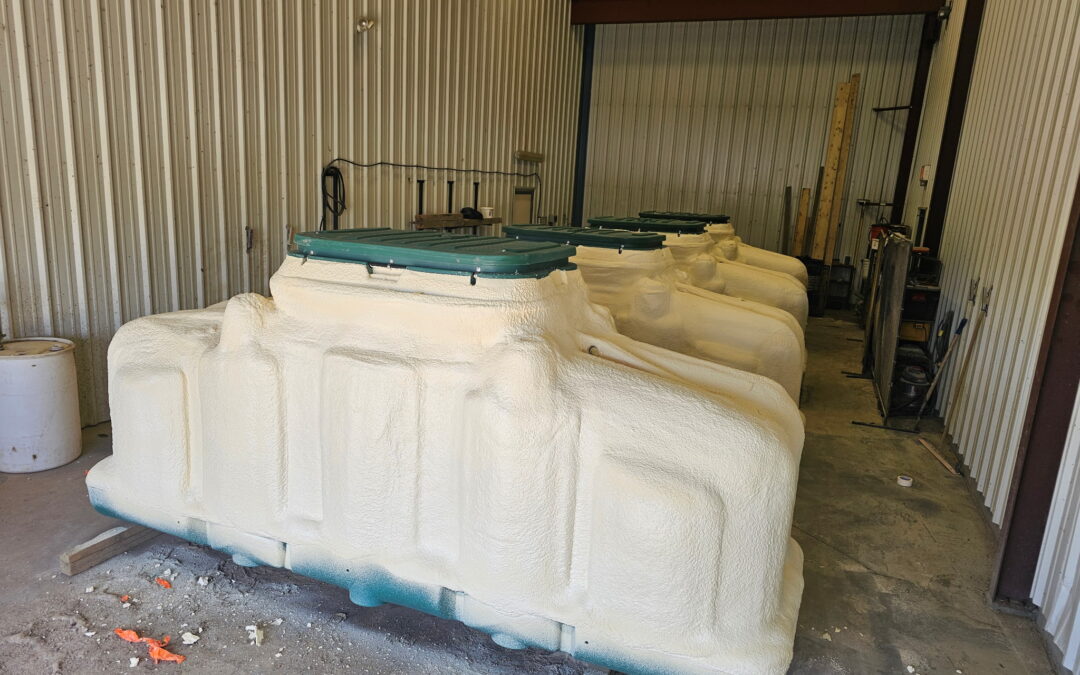
Northern Spray Solutions recently completed spray foam insulation on four tanks in Entwistle, AB.
Tanks can be difficult to insulate with standard materials because of their shape, fittings, edges, and curved surfaces. Spray foam works well for this type of project because it can be applied directly to the tank surface and built up around the areas that need coverage.
For Alberta properties, tank insulation is often about more than comfort. It can help reduce temperature swings and give exposed storage tanks a better layer of thermal protection.
Why Insulate Storage Tanks?
Tanks are often placed in shops, utility buildings, farm buildings, industrial spaces, and other working areas where temperatures can shift quickly.
When a tank sits in a cold or uncontrolled space, the contents inside may be affected by the surrounding temperature. Depending on the use of the tank, that can create issues with freezing risk, heat loss, condensation, or general performance.
Spray foam insulation helps create a covered exterior layer around the tank. That added layer can help the tank handle changing conditions more effectively than a bare exposed surface.
Why Spray Foam Works Well on Tanks
Tank insulation is not always simple. Flat insulation products are harder to fit cleanly around rounded shapes, fittings, lids, valves, and raised areas.
Spray foam can follow the shape of the tank more naturally. It fills around curves and forms a continuous layer over the surface being insulated. That matters because gaps and missed areas can reduce the value of the insulation work.
The goal is not just to cover the tank. The goal is to create consistent coverage where the tank needs protection.
A Four-Tank Project in Entwistle
This Entwistle, AB project involved four tanks inside a working shop or storage-style building.
The photo shows the tanks after spray foam was applied. You can see how the foam follows the tank shape, wraps around raised sections, and covers surfaces that would be awkward to insulate with standard board or batt insulation.
This kind of project takes careful spraying. The crew needs to work around the tank layout, keep the coverage consistent, and build up the insulation without blocking access points that still need to be used.
Useful for Alberta Conditions
Alberta weather can be hard on buildings, equipment, and storage systems.
Even when tanks are indoors, many shops and outbuildings are not heated the same way as a home or office. Cold snaps, shoulder-season temperature swings, and long winter conditions can all affect exposed tanks.
Spray foam tank insulation can help reduce the impact of those changes. It gives the tank a better protective layer and can be a practical choice when the space is used for farming, commercial work, storage, or industrial operations.
Plan the Job Before Spraying
Tank insulation should be planned before the spray foam crew arrives.
The tank surface may need to be reviewed. Access points, lids, valves, fittings, labels, and working clearances should be identified ahead of time. The crew also needs enough room to move around the tanks and apply the foam properly.
Good prep helps avoid problems during the job. It also helps make sure the insulation supports how the tanks are actually used after the work is done.
Ask About Spray Foam Tank Insulation
If you have tanks that need better thermal protection, Northern Spray Solutions can review the project and explain whether spray foam insulation makes sense.
This recent Entwistle, AB job is a good example of how spray foam can be used on tank surfaces that are difficult to insulate with standard materials.