
A shed does not have to stay cold, drafty, or limited to basic storage.
We recently completed a spray foam insulation project for a she shed in Drayton Valley, AB. The goal was simple: help make the space more usable for hobbies, projects, storage, or whatever the owner has planned next.
For small backyard buildings, the roof and ceiling area matter a lot. Without proper insulation, heat can escape quickly in colder weather, and the space can become uncomfortable during warmer months. Spray foam helps create a more controlled shell before the interior is finished.
Why Insulate a Shed?
A shed, hobby shed, or backyard workspace is only useful if it feels comfortable enough to spend time in.
Without insulation, these small buildings can change temperature quickly. They may feel cold in the morning, hot in the afternoon, and drafty whenever the weather shifts. That makes the space harder to use for crafts, reading, tools, storage, remote work, or weekend projects.
Spray foam insulation helps reduce air movement and adds a thermal layer to the building. That gives the space a better starting point before wall finishes, shelving, flooring, or electrical work are completed.
The Ceiling Is a Big Deal
In a small building, the ceiling and roofline can have a major impact on comfort.
Heat rises, so an uninsulated roof area can lose warmth quickly during cold weather. In summer, the roof can also absorb heat and make the inside feel uncomfortable. That is why the ceiling is one of the first areas worth addressing in a shed or hobby building.
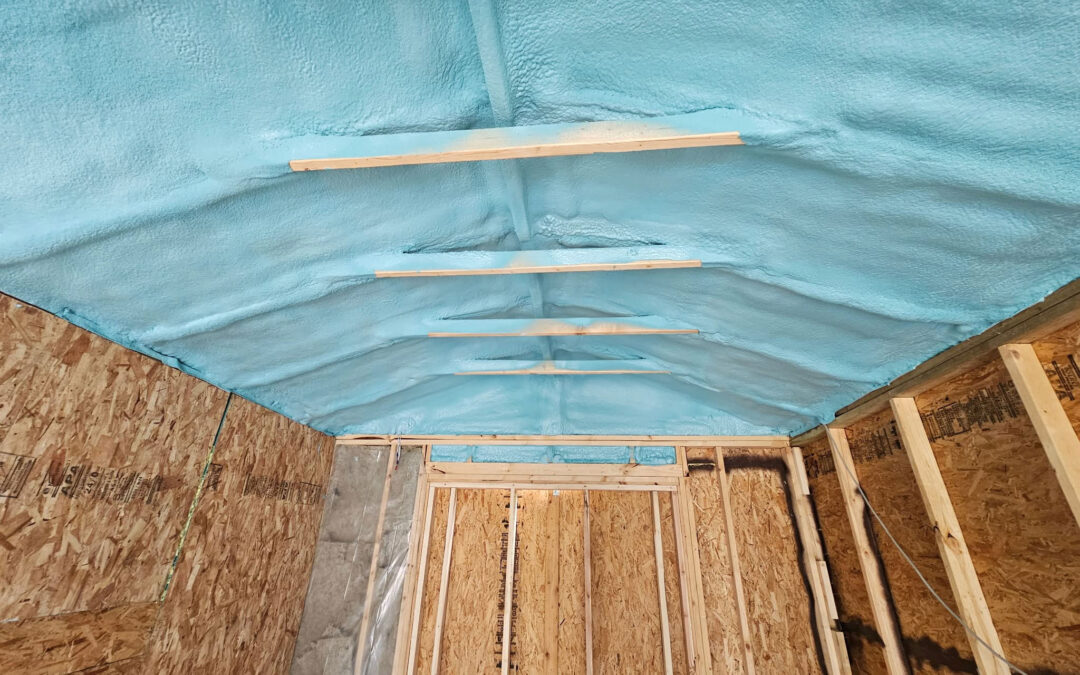
In this Drayton Valley project, spray foam was applied across the roofline, following the framing and covering the overhead space. That helps create a more consistent insulated area above the room.
A Recent Project in Drayton Valley
This Drayton Valley, AB she shed project shows how much difference the insulation stage can make before the space is finished.
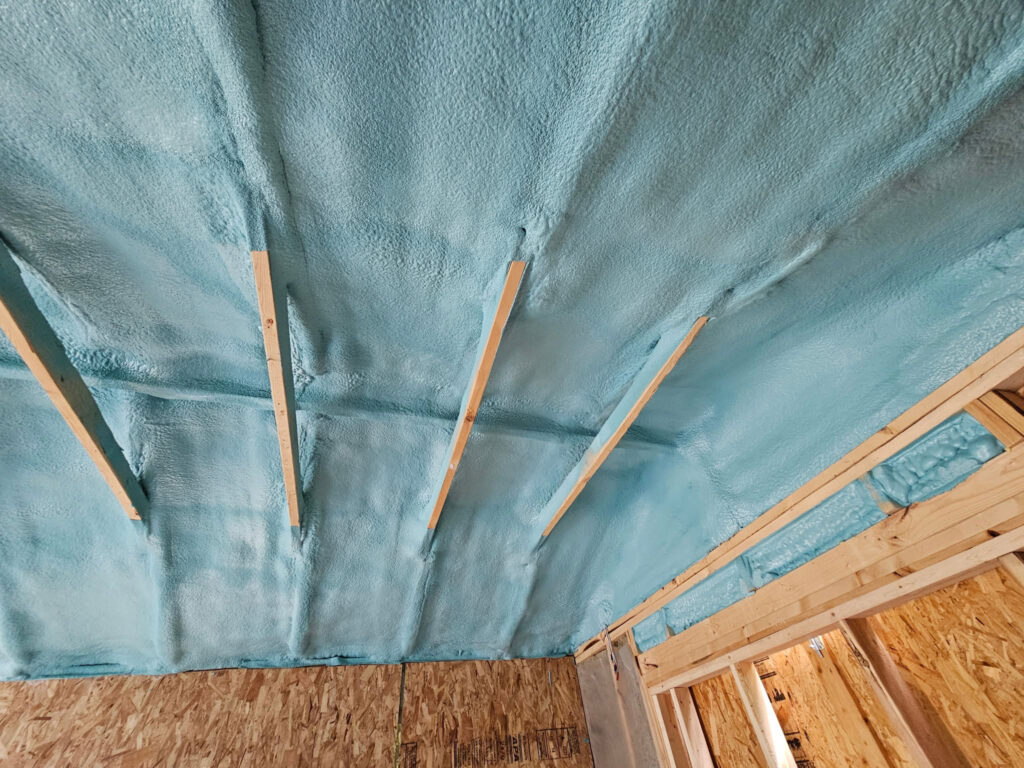
The photos show spray foam applied to the roof and upper wall areas inside the framed structure. The foam follows the shape of the ceiling and reaches into areas that would be harder to handle with cut-and-fit insulation.
For a small building, that coverage matters. Gaps, edges, and awkward framing areas can all affect how the space feels once the project is complete.
Good for Hobby Spaces and Small Buildings
Spray foam is not only for homes, shops, and garages.
It can also be a good option for smaller buildings that need better comfort and protection from Alberta weather. That includes she sheds, hobby sheds, backyard offices, small workshops, garden buildings, and storage spaces.
The right insulation plan depends on how you plan to use the building. A space used for occasional storage may not need the same approach as one used for hobbies, tools, crafts, or work.
That is why we look at the actual building before recommending the next step.
Plan Before the Interior Is Finished
The best time to insulate a shed or hobby space is before the interior is closed in.
Once panels, drywall, shelving, or finished walls are installed, the framing and roof cavities become harder to access. Handling the spray foam first gives the project a cleaner path forward.
It also helps avoid rework later. If you want the space to feel more comfortable, it makes sense to deal with insulation before spending money on finishes.
For small buildings, the order of work matters.
Ask About Shed Spray Foam Insulation
If you are building or finishing a she shed, hobby shed, backyard office, or small workshop, we can help you figure out whether spray foam makes sense.
We are based in Spruce Grove, Alberta, and work on spray foam insulation projects across Edmonton and surrounding Alberta communities, including projects in areas such as Drayton Valley.
This recent Drayton Valley, AB project is a good example of how spray foam can help turn a basic shed into a more usable space.