
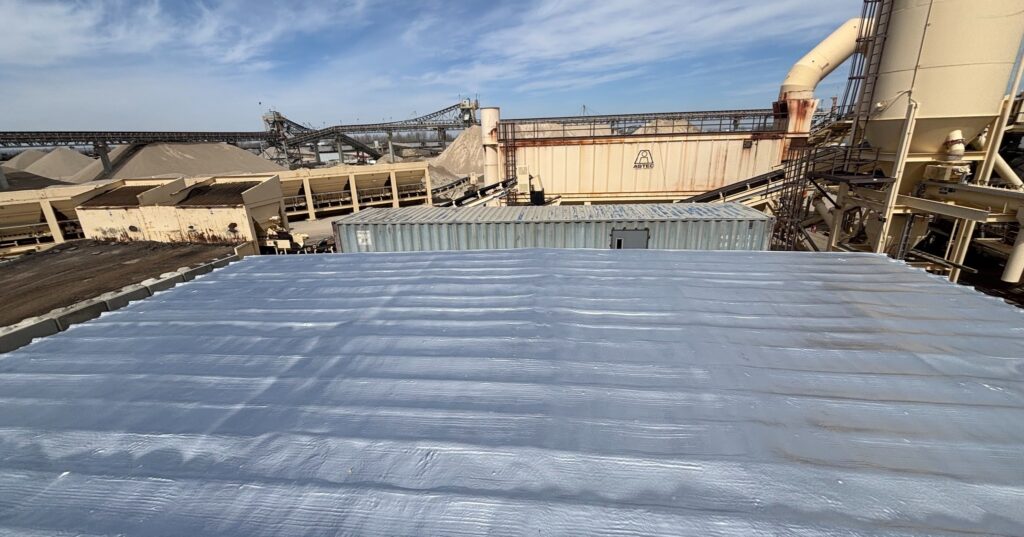
A finished roof coating can be hard to photograph when the surface reflects light. That is usually a good problem to have.
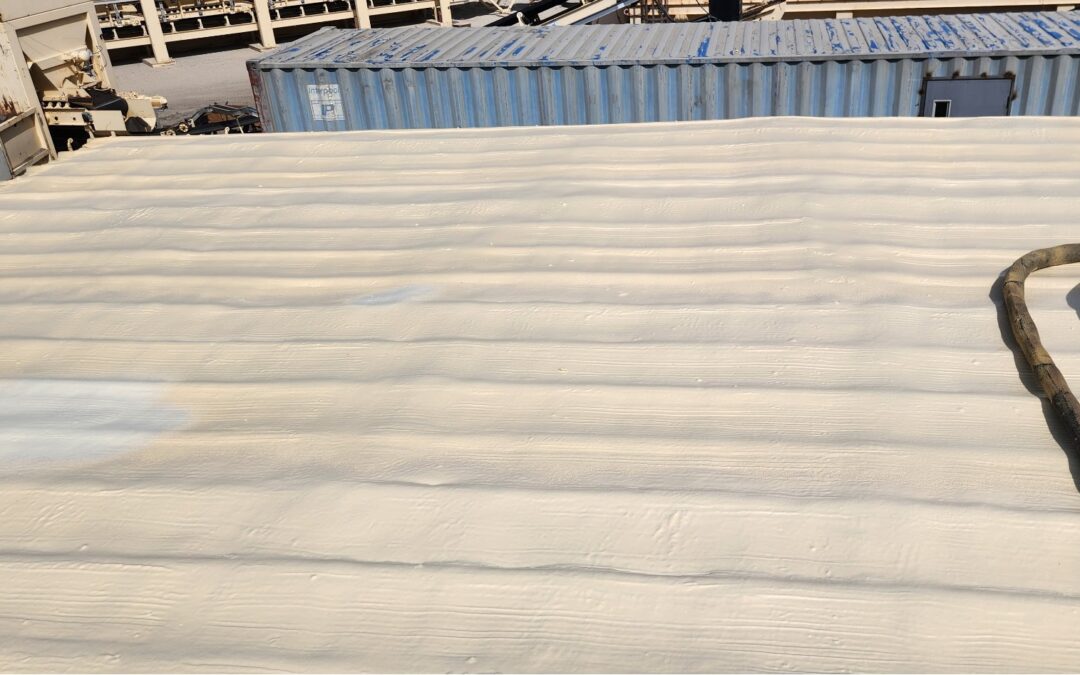
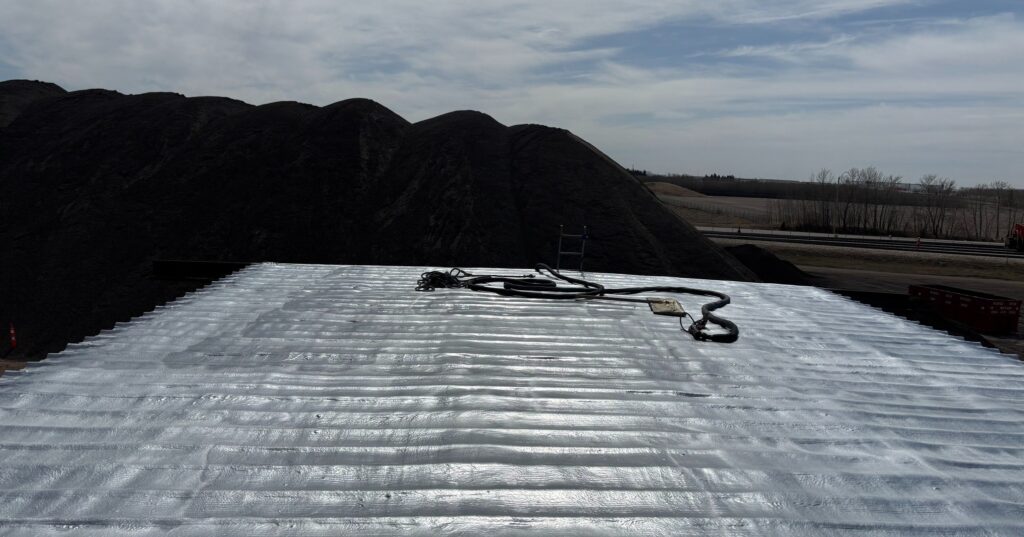
Northern Spray Solutions recently completed a spray foam roof coating project in Devon, AB. The top photo shows the foam layer. The bottom photos show the finished coating over top.
That coating is not just for looks. It helps protect the spray foam underneath and gives the roof a finished surface built for exposure to Alberta weather.
The Foam Is Only Part of the Roof System
Spray foam roofing starts with the foam layer, but the job does not end there.
The foam helps create a continuous surface across the roof. It can fill uneven areas, cover seams, and create a better base over the existing roof structure when the project is suitable for this type of system.
Once that foam is installed, it needs protection. That is where the coating comes in.
The finished coating helps cover the foam layer and shields it from the weather, sunlight, and regular roof exposure.
Why the Coating Matters
The coating is the outer layer people see, but its real job is protection.
A roof surface deals with sun, wind, rain, snow, ice, and temperature swings. In Alberta, those changes can be hard on exposed materials. The coating helps protect the foam below so the roof system can do its job properly.
It also gives the roof a cleaner finished look. In this project, the reflective coating made the roof difficult to photograph clearly because of how much light it bounced back.
That kind of finish is exactly what many building owners want from a completed roof coating project.
A Reflective Surface Has a Practical Purpose
A reflective roof coating is not just about appearance.
A lighter, reflective surface can help reduce how much heat the roof surface absorbs from direct sunlight. That can matter for commercial and industrial buildings with large exposed roof areas.
The exact benefit depends on the roof, the building, the coating product, and the conditions around the site. Still, the reason many roof systems use this type of finish is simple: the top layer takes the weather first.
It protects the work underneath and gives the roof a finished surface that is easier to inspect.
Good Roof Work Is Not Always Dramatic
Some roof repairs and coating jobs do not look dramatic in photos.
There may not be a big before-and-after moment. No collapsed section. No major leak showing in the picture. Just a roof that has been foamed, coated, and finished properly.
That is often the point.
The best roof work is usually done before a small problem turns into a larger one. Spray foam and coating can help create a protected surface over the roof area when the existing conditions are right for the system.
A Practical Option for Commercial Roof Areas
Spray foam roofing and protective coating can be a good fit for certain commercial, industrial, and shop roof areas.
It may be worth considering when the roof has seams, surface wear, uneven areas, or sections that need a protective system applied over top. It can also be useful when a building owner wants to improve the roof surface without jumping straight to a full replacement.
Every roof still needs to be reviewed first. The existing surface, drainage, damage, moisture, and building use all matter.
Done Right Means More Than Spraying and Leaving
A roof coating job needs proper prep, application, and timing.
The surface has to be reviewed before work starts. The foam needs to be applied correctly. The coating needs to cover the foam and create a finished protective layer.
Skipping steps can lead to weak spots. That is why roof work should be handled by a crew that understands the full system, not just one part of it.
Northern Spray Solutions works on roof coating projects where the goal is practical protection, not a quick cosmetic cover-up.
Ask About Spray Foam Roof Coating in Alberta
If your commercial, industrial, or shop roof needs attention, Northern Spray Solutions can review the surface and explain whether spray foam and coating make sense for the job.
This recent Devon, AB project shows how foam and protective coating work together to create a cleaner, more weather-ready roof surface.