
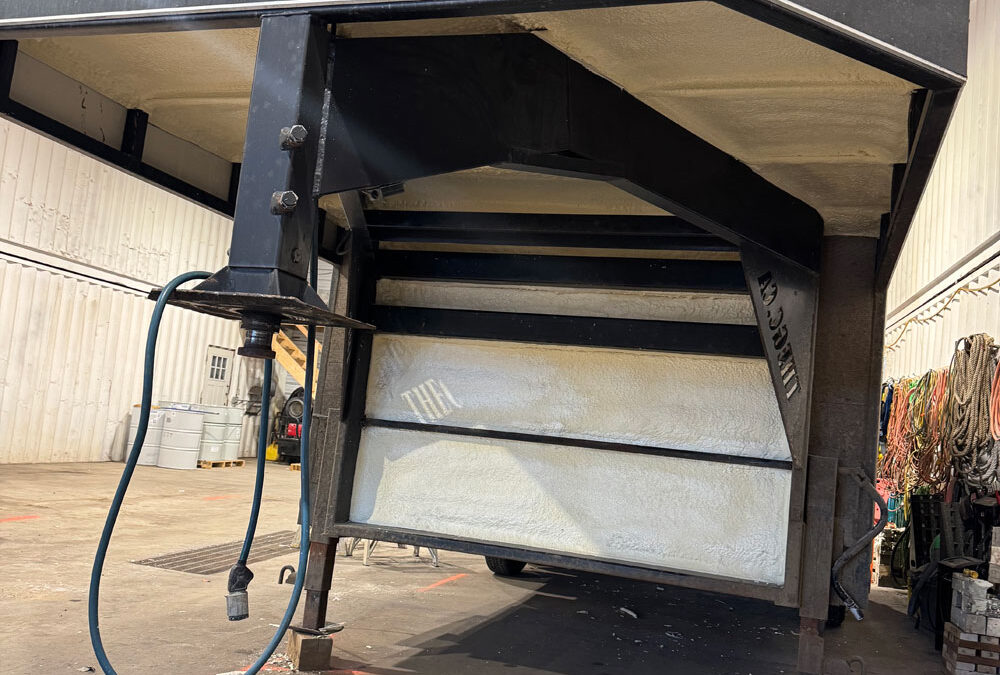
Goose neck trailers take a beating—weather, road vibration, temperature swings, and constant loading all put stress on the structure. One of the best upgrades owners can make is proper insulation. It protects the trailer’s contents, reduces heat loss, improves comfort, and adds long-term durability.
Northern Spray Solutions recently completed a full spray foam application on a goose neck trailer, insulating both the interior walls/ceiling and the exterior front nose section. Below is a closer look at the project, the process, and the benefits of spray foam for mobile and agricultural equipment.
What the Project Included
This was a full spray foam retrofit on an older goose neck trailer that needed better thermal performance and protection for transported equipment. The job included:
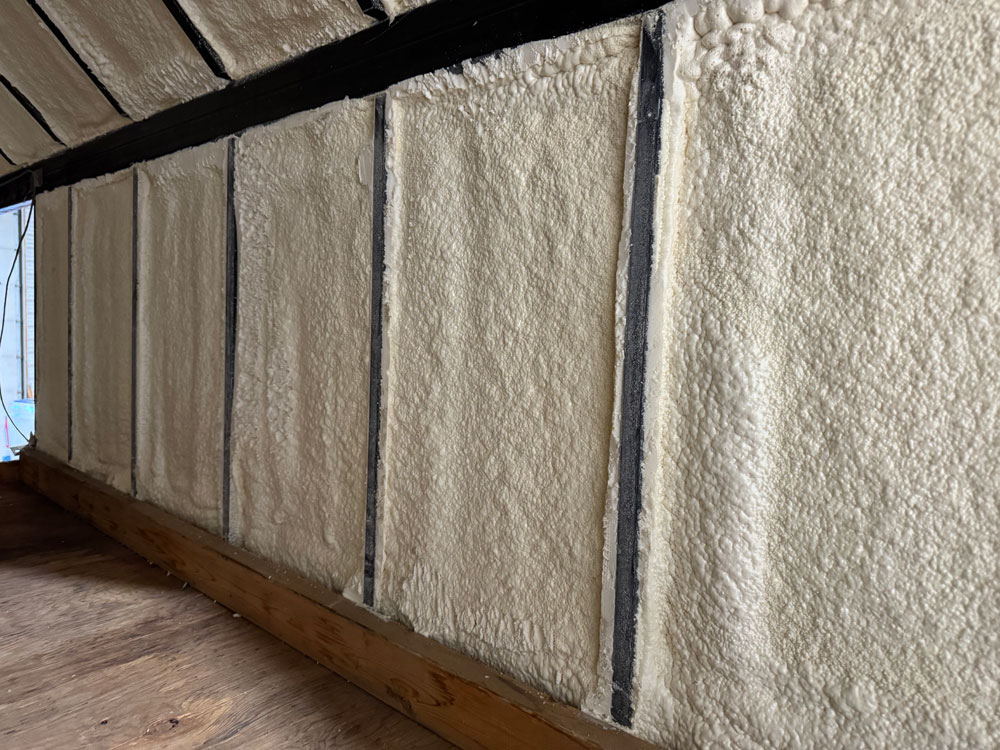
Interior Spray Foam on Walls & Ceiling
We applied closed-cell spray polyurethane foam throughout the inside framework of the trailer. Closed cell was chosen for its high R-value and moisture resistance—important for Alberta’s cold winters and rapid freeze/thaw cycles.
Exterior Front Nose Insulation
The front exterior “nose” of the trailer was also insulated from underneath. This area often suffers the most heat loss and collects road spray, so spray foam provides both insulation and a durable moisture barrier.
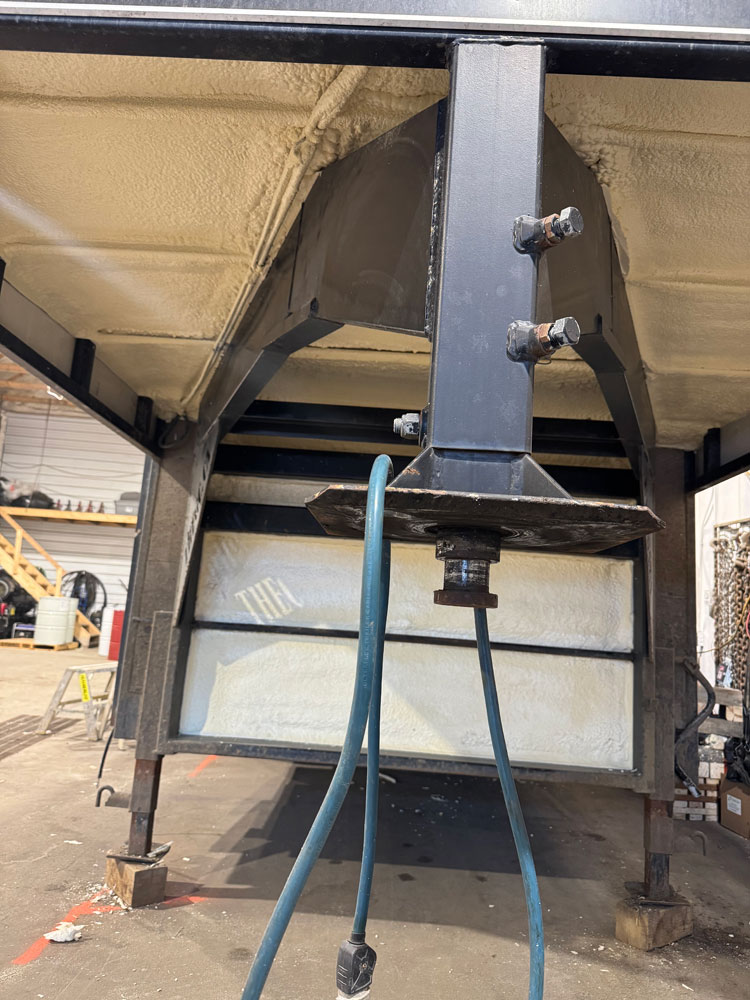
Even Coverage & Air Sealing
Spray foam was applied between metal framing, creating a fully sealed, rigid insulation layer. This eliminates drafts, reduces condensation, and helps extend the life of the trailer.
Why Spray Foam is Ideal for Trailers
Whether it’s a cargo trailer, horse trailer, RV, or work unit, spray foam offers key advantages:
● High R-Value in Tight Spaces
Trailers don’t allow room for thick batt insulation. Closed-cell spray foam packs R-6 per inch and maximizes thermal performance.
● Stops Moisture & Condensation
Metal structures are prone to condensation buildup. Spray foam creates a moisture-resistant barrier that prevents drips, rust, and mold.
● Adds Strength to the Trailer Frame
Closed-cell foam hardens into a dense structure. This adds rigidity and supports the trailer’s metal framing—useful for older units or heavy-duty applications.
● Improves Year-Round Usability
Insulated trailers warm up faster, retain heat longer, and stay cooler in the summer. For people hauling animals, tools, or temperature-sensitive equipment, this makes a major difference.
Our Application Process
Every trailer is built differently, so we prepare, mask, and apply foam based on:
-
Frame layout
-
Venting and air gaps
-
Flooring type
-
Electrical or plumbing access
-
Desired thickness (usually 1–2 inches of closed cell)
Once the surface is prepped, foam is sprayed in controlled passes to ensure an even, watertight seal. After curing, any excess is trimmed and the trailer is ready for finishing.
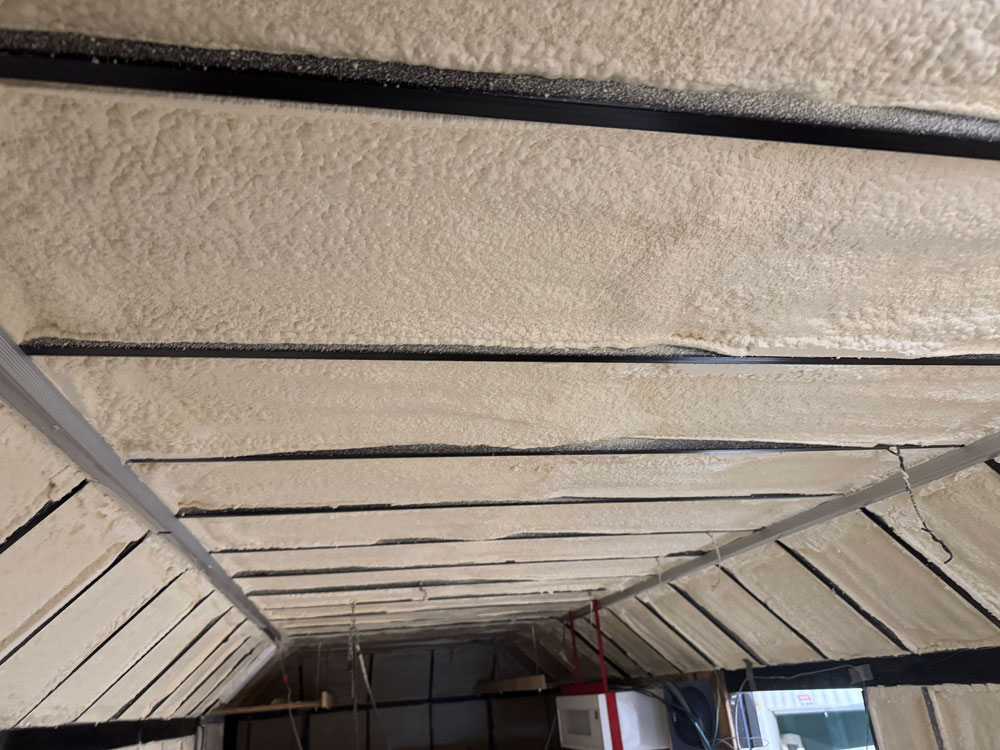
Results for This Trailer
The finished goose neck trailer now has:
-
Strong thermal efficiency
-
Reduced heat loss from the front nose
-
A quieter and more comfortable interior
-
Better structural stiffness
-
Long-term resistance to moisture and road conditions
This upgrade not only improves performance now but protects the trailer for years of use.
Thinking About Spray Foam for Your Trailer?
Northern Spray Solutions works with:
-
Goose neck trailers
-
Enclosed cargo trailers
-
RVs and camper conversions
-
Horse and livestock trailers
-
Mobile work units
-
Custom industrial trailers
If you want to improve comfort, durability, and energy savings, spray foam is one of the most effective upgrades you can make.
Get a Quote or Ask a Question
If you have a similar trailer project in mind, contact us and we’ll walk you through the best insulation options.
Northern Spray Solutions
Spruce Grove, Alberta
📞 780-963-4493