
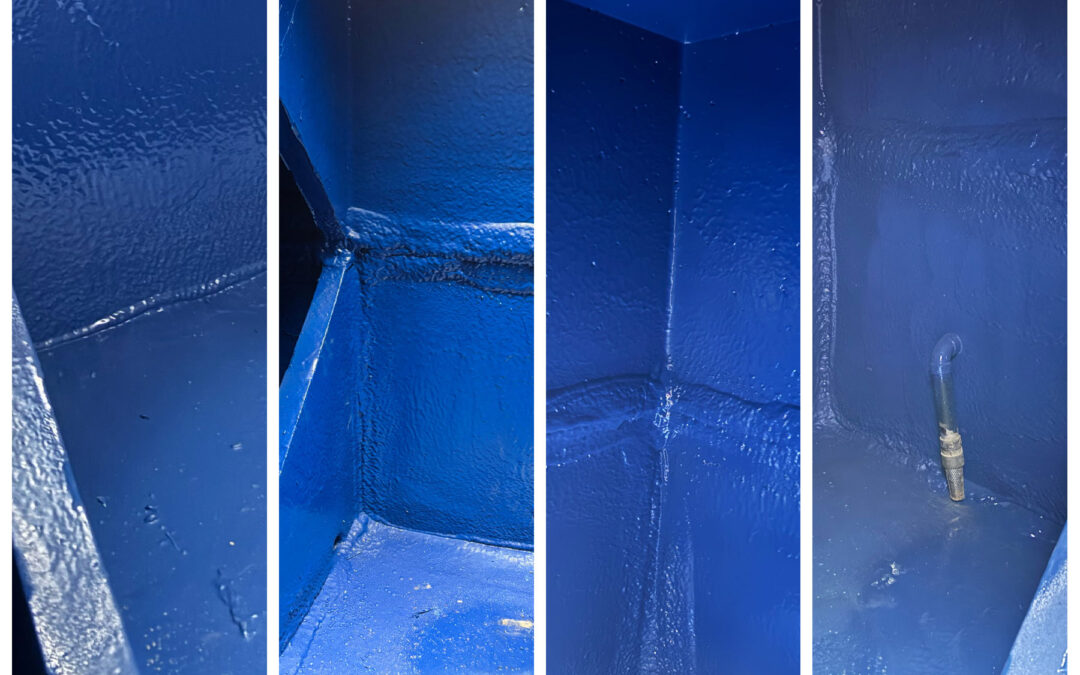
Cistern Tank Repair with Spray Foam and Potable Water Coating
Cistern tanks do not stay in good condition on their own. Over time, cracks, worn areas, and weak points inside the tank can lead to leaks and bigger repair issues if they are left alone.
This recent project from Northern Spray Solutions is a good example of how cistern tank repairs can be handled properly. In this case, the cracks were first sealed with spray foam, and then the full interior surface was coated with a potable water coating.
That process matters. A cistern tank is not just another surface to patch. It holds water, so the repair has to deal with both the damaged areas and the condition of the full interior.
Why Cistern Tank Repairs Matter
When a cistern tank starts to crack or wear down, the problem usually does not stay small for long. Water can find its way into weak points, existing cracks can spread, and the inside surface can become harder to maintain.
For many property owners, the first sign is a leak. In other cases, the problem shows up as visible cracking, worn seams, or trouble spots around corners and penetrations.
That is why a proper repair approach matters. Instead of only touching up one small section, the goal is to address the damaged areas and improve the interior surface as a whole.
A Recent Cistern Tank Repair Project
For this project, Northern Spray Solutions repaired a cistern tank by taking a two-step approach.
First, the cracks were sealed with spray foam. This helped address the damaged areas before the final coating was applied.
After that, the tank was coated across the entire interior surface with a potable water coating.
The finished surface shown in the photos covers the interior walls, floor, corners, seams, and transitions. You can also see how the coating was worked around the interior details, including the pipe penetration. That full-surface approach is important because cistern tanks often fail at joints, corners, and other hard-to-seal areas, not just in the middle of a flat wall.
Why Use Spray Foam First
The spray foam step is an important part of the repair.
If a cistern tank has cracks, those cracks need to be dealt with before the coating stage. The coating is the finish layer, but the repair underneath still matters. By sealing the cracks first, the tank is better prepared for the next step.
In a repair like this, spray foam helps fill and seal the damaged areas so the final interior coating can be applied over a more complete surface.
That is part of what makes this kind of repair more than a quick patch job.
Why the Potable Water Coating Matters
After the cracks were sealed, Northern Spray Solutions applied a potable water coating across the full interior surface.
That full coating step helps create a more uniform interior finish throughout the tank. Instead of only covering isolated areas, the work extends across the inside surface, including the problem areas, seams, and transitions.
For cistern tanks, that matters because water exposure is constant. The weak points are often found in:
- inside corners
- wall-to-floor transitions
- seams and joints
- repaired crack areas
- penetrations and fittings
- lower sections where water sits over time
A full-surface coating helps tie those areas together into one continuous interior finish.
The Detail Work Matters in a Cistern Tank
These photos show more than just a blue finish. They show the kind of detail that matters in tank repair work.
A flat open area is usually the easiest part to coat. The harder work is around the corners, along the seam lines, at the bottom transitions, and around penetrations where leaks or wear are more likely to show up first.
That is one reason cistern tank work needs a careful approach. If those areas are missed, rushed, or poorly covered, the repair may not hold up the way it should.
In this project, the coating appears to carry through the inside corners and across the transition points rather than stopping short at the easy sections. That is what you want to see in a repair like this.
Signs Your Cistern Tank May Need Repair
Not every tank problem looks serious at first. In many cases, the warning signs start small.
You may want to have your cistern tank looked at if you notice:
- visible cracks inside the tank
- signs of leaking or water loss
- worn or deteriorating interior surfaces
- trouble spots around seams or corners
- older repairs that are starting to fail
- areas that look rough, uneven, or exposed
If you catch these issues earlier, you have a better chance of fixing the problem before it gets worse.
Repairing Instead of Replacing
In some situations, repairing a cistern tank can make more sense than full replacement. That depends on the condition of the tank, the extent of the damage, and whether the structure is still sound overall.
This is where a site review helps. A proper assessment can show whether the tank is a good candidate for repair and what type of work is needed.
For tanks with cracks and interior wear, sealing the damaged areas and coating the interior may provide a practical way to restore the surface without going straight to replacement.
Cistern Tank Repairs by Northern Spray Solutions
Northern Spray Solutions handles specialized spray applications, including cistern tank repair work like the project shown here.
In this case, the process involved:
- identifying and addressing the damaged areas
- sealing the cracks with spray foam
- applying potable water coating across the full interior surface
That gives property owners a more complete repair approach than simply patching one visible area and hoping for the best.
If your cistern tank is leaking, showing cracks, or needs to be repaired, Northern Spray Solutions can take a look and help you understand the next step.
Need Your Cistern Tank Repaired?
If you have a leaking cistern tank or you have noticed cracks inside the tank, Northern Spray Solutions can review the condition and let you know what makes sense.