
In many homes, the joist ends are one of the easiest places for air movement and heat loss to go unnoticed.
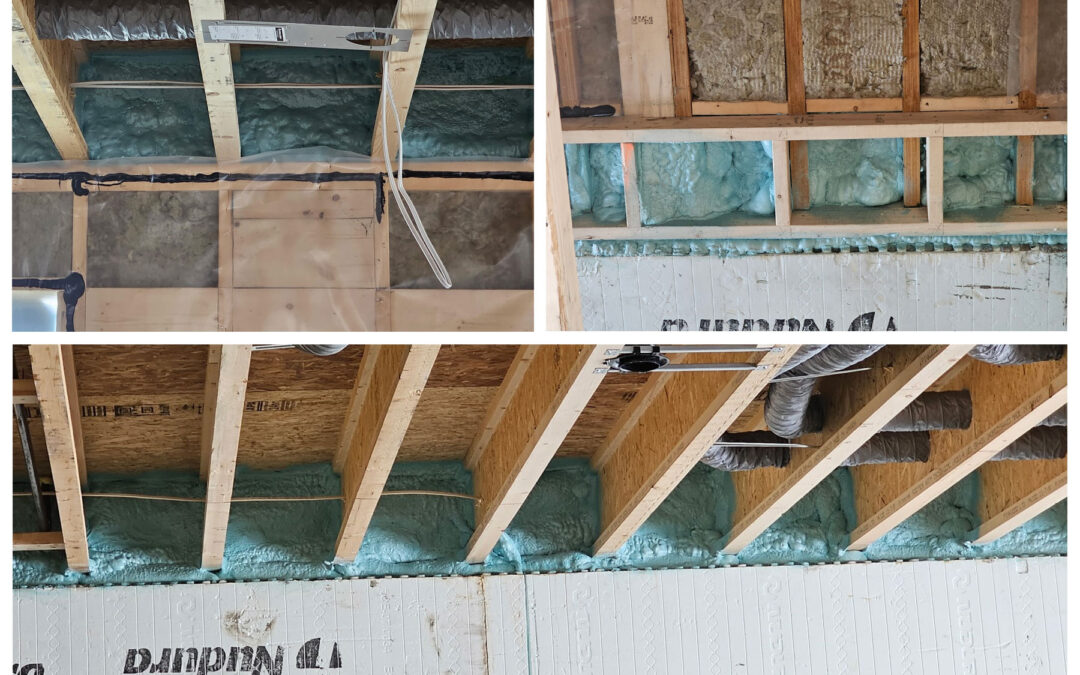
This recent project from Northern Spray Solutions shows what properly sealed joist-end pockets can look like. These are the spaces where the floor framing meets the outside wall. When these areas are left open or poorly sealed, they can allow gaps, drafts, and temperature changes to affect the home.
On this job, spray foam was applied into the joist-end pockets to help close gaps and support more consistent indoor temperatures.
Why Joist Ends Matter
Joist ends are small spaces, but they can have a big impact on comfort.
These pockets sit along the outside edge of the home, often above the foundation wall or near rim board areas. Because they connect framing, insulation, exterior walls, and interior space, they can become weak points in the building envelope.
If they are not sealed properly, air can move through gaps around the framing. That can make rooms feel colder, increase drafts, and force the heating system to work harder than it should.
Spray foam is often used in these areas because it can expand into gaps and form a tighter seal around uneven framing.
What Properly Sealed Joist Ends Look Like
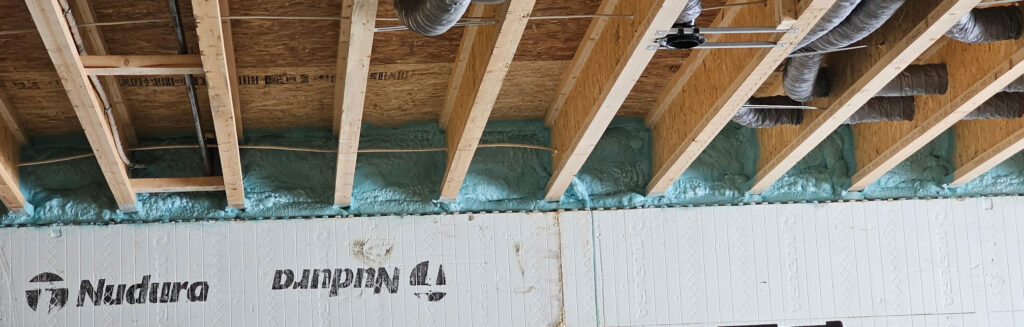
The photos from this project show spray foam installed between the joists along the exterior wall area.
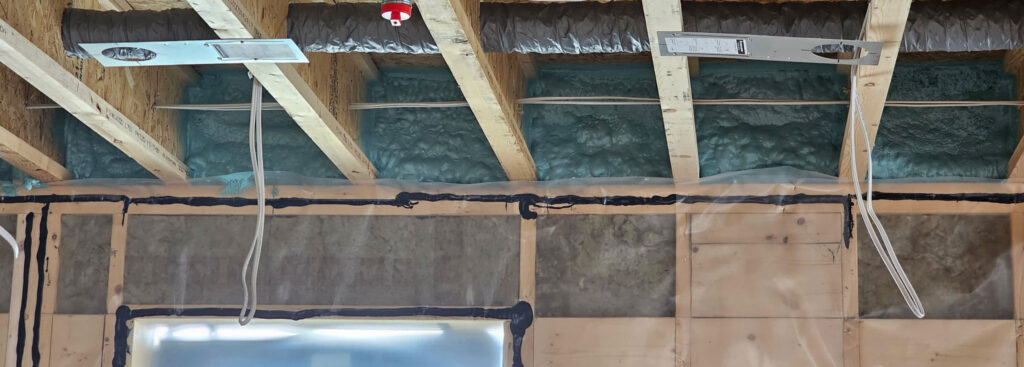
You can see the foam filling the pockets behind the framing and along the rim area. These are the places that can be difficult to seal with batt insulation alone, especially when the framing is uneven or when there are narrow gaps around wood, wiring, and ductwork.
The goal is not just to add insulation. The goal is to close the gaps that allow air movement.
That is why joist-end sealing is both an insulation detail and an air-sealing detail.
Why Spray Foam Works Well in These Pockets
Joist-end pockets are not always clean, square, or easy to reach. They often include framing changes, mechanical runs, wiring, ductwork, and tight corners.
Spray foam works well in these spots because it can be applied directly into the pocket and around the shape of the space. Once installed, it helps reduce air leakage and adds insulation value in an area where heat loss is common.
The post notes that the depth in these pockets is typically around 4 inches, which can meet code requirements for many buildings depending on the project and local code requirements.
Comfort Starts at the Building Envelope
A home can have a good furnace and still feel uncomfortable if the building envelope has weak spots.
The building envelope is what separates the inside of the home from the outside conditions. Joist ends are part of that envelope, and they need attention because they sit at a key transition point between the foundation, floor framing, and exterior wall.
When these areas are sealed properly, the home has a better chance of holding heat more evenly.
That can mean fewer cold spots, less draft movement, and a more consistent indoor feel through Alberta winters.
Good Joist-End Sealing Is Detail Work
This type of insulation work is not just about spraying foam into a wall cavity and moving on.
The installer has to pay attention to each joist bay, the back of the pocket, the framing edges, and any small gaps where air could move through. The photos show foam installed across multiple bays, including around framing and mechanical areas.
That detail matters because one missed gap can still allow air movement.
For homeowners, this is one of those jobs where the finished work may be hidden later, but the comfort difference can still be felt.
When to Look at Your Joist Ends
You may want to have your joist ends checked if you notice cold floors, drafts near exterior walls, uneven room temperatures, or higher heating bills than expected.
This is also worth reviewing during basement renovations, new home construction, garage builds, additions, or insulation upgrades.
Once drywall or finishing materials are installed, these areas become harder to access. That is why it is better to deal with joist-end sealing while the framing is still open.
Northern Spray Solutions can review the area and recommend the right spray foam approach based on the space.
Joist End Spray Foam Insulation in Alberta
Northern Spray Solutions provides spray foam insulation for homes, shops, garages, renovations, and building projects across the Edmonton and Spruce Grove area.
For joist-end pockets, the work is focused on closing gaps, insulating hard-to-reach spaces, and helping the home maintain steadier temperatures.
If you are building, renovating, or dealing with cold areas in your home, the joist ends are worth checking.